
MiCA Compliance for Institutions: What Actually Changes July 1, 2026
From July 1, 2026, crypto-asset service providers (CASPs) are expected to operate under MiCA authorisation, subject to national transition timelines. Existing national regimes are being phased out across EU jurisdictions, reshaping how crypto-asset services are delivered across the region.
July 1, 2026 marks an important milestone for the European crypto sector.
From this point, crypto-asset service providers (CASPs) are expected to operate under MiCA authorisation, subject to national transition timelines. Existing national regimes are being phased out across EU jurisdictions, reshaping how crypto-asset services are delivered across the region.
MiCA (Markets in Crypto-Assets Regulation) is the first comprehensive legal framework for digital assets at the EU level. It became fully applicable to crypto-asset service providers in December 2024, introducing unified standards for licensing, transparency, consumer protection, and stablecoin oversight. A transitional period allowed existing providers to continue operating under national regimes while preparing for authorisation. That transition is now approaching its final stage.
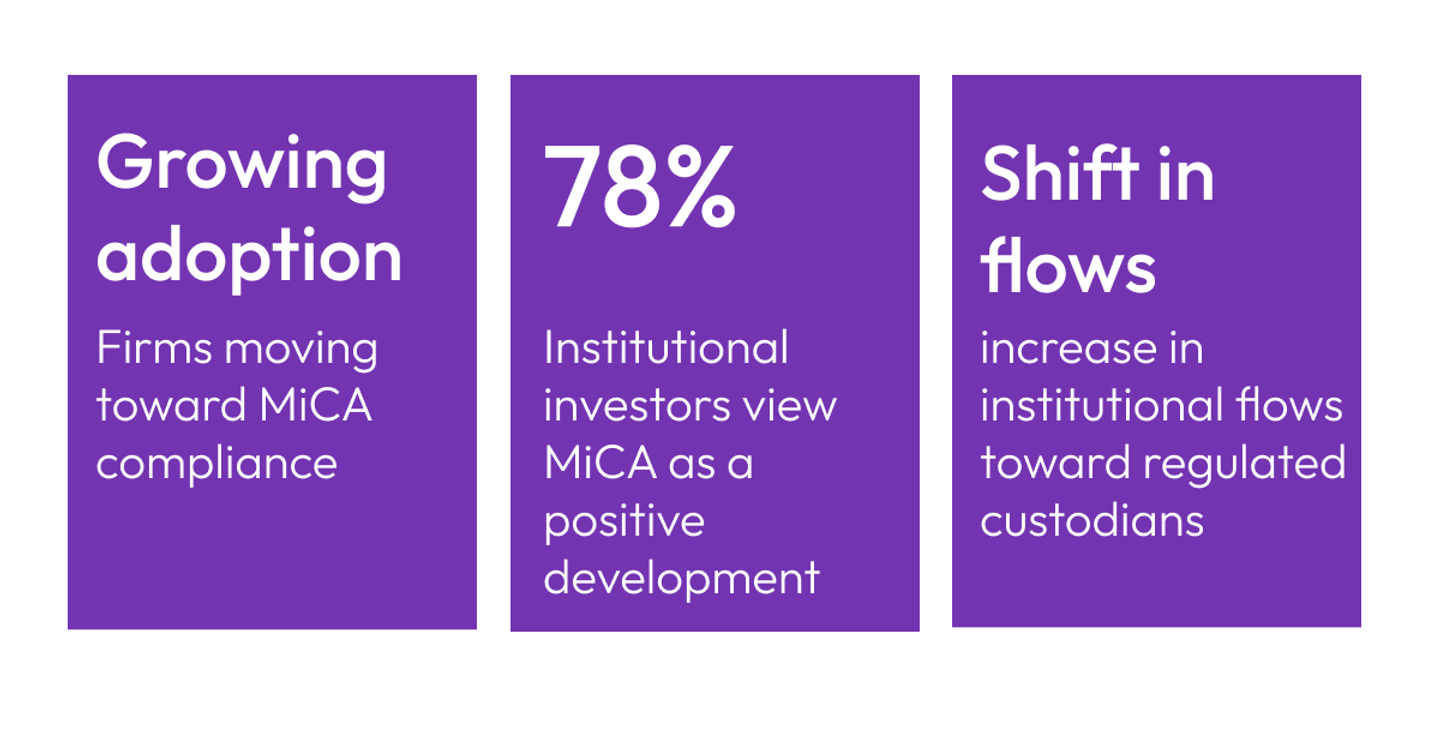
What actually changes on July 1
The transition to MiCA authorization becomes critical
The transitional period is coming to an end across most EU jurisdictions. Providers that have relied on national regimes are expected to transition to MiCA authorisation in line with local timelines. Several jurisdictions have already closed their transition windows ahead of the broader EU timeline, while others remain open until July 1.
Custody is treated as a distinct regulated activity
MiCA defines the safekeeping and administration of crypto-assets on behalf of clients as a separate regulated service, with specific requirements applied to custody providers. These include clear segregation of client assets, defined operational controls, structured handling of client funds, and liability for the loss of client assets or means of access where such loss is attributable to the provider.
Capital and operational requirements
MiCA introduces minimum capital requirements for custodial services, starting from €125,000, depending on the scope of activities. In addition to initial capital, firms are required to maintain ongoing own funds based on their fixed overheads. Beyond capital, firms are expected to demonstrate structured risk management, cybersecurity controls, outsourcing governance, and ongoing reporting to national competent authorities. In practice, these standards align more closely with traditional financial infrastructure.
What this means for institutional clients
The choice of custodian now directly determines the regulatory framework under which assets are held. Working with a non-authorised provider may limit access to the protections introduced under MiCA, including asset segregation, transparency standards, and formal dispute mechanisms. For institutional investors, this becomes a core due diligence consideration rather than a technical preference.
How The Vault supports MiCA compliance
As regulatory requirements become more defined, infrastructure choices play a central role in compliance readiness. The Vault has been designed as a MiCA-aligned ecosystem from the outset. Regulatory requirements are embedded into the product architecture and define how the system operates across custody, treasury, and digital asset management.
Ready to take control of your digital asset operations?